✍️ Authoring with Confidence
Boosting completion rates by reimagining survey creation with intelligent, contextual support
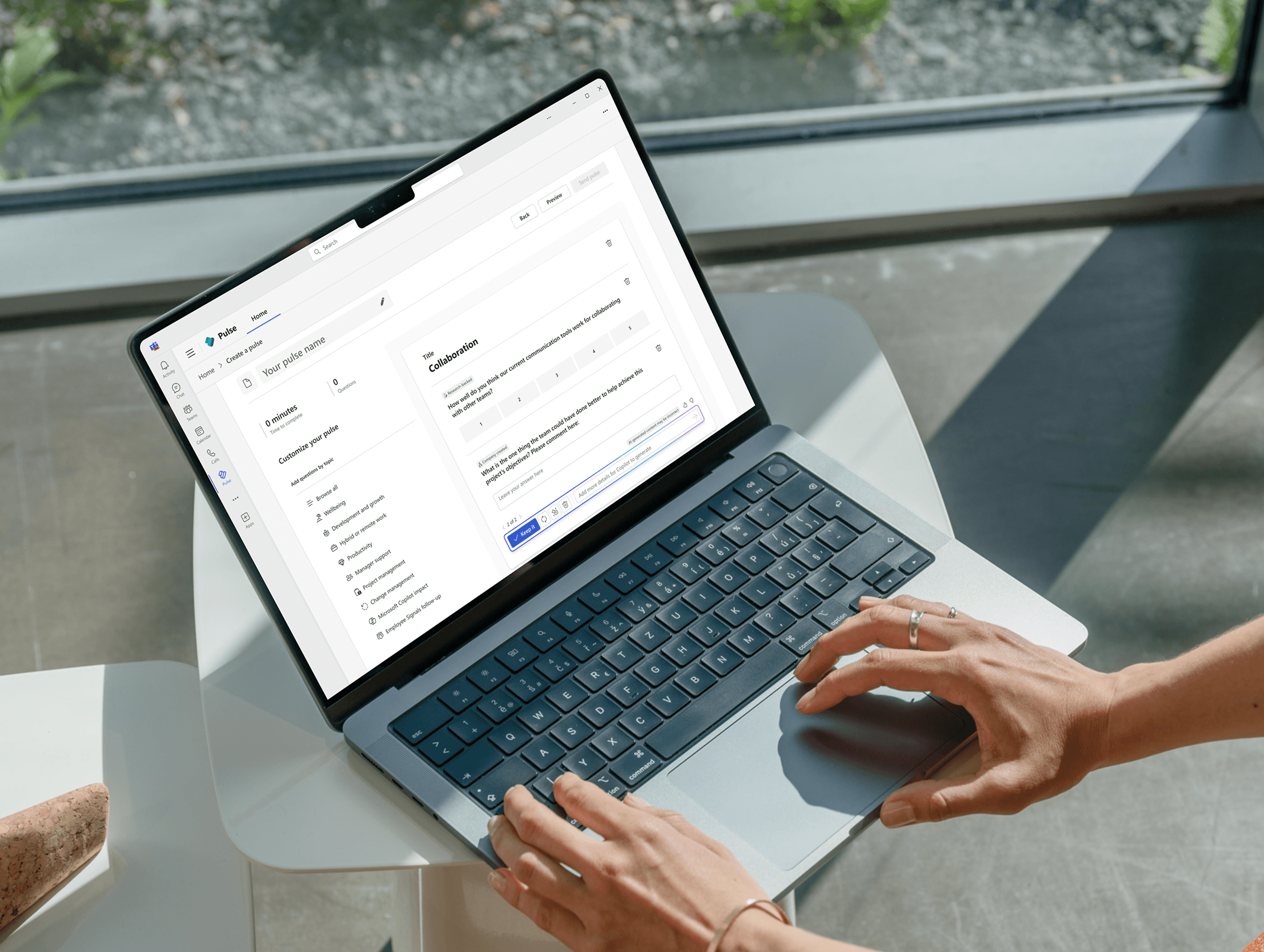
Overview
Viva Pulse empowers managers to collect feedback from their teams. But we noticed a bottleneck: while many users started creating surveys, only 5% followed through to send them.
I led the design of a Copilot-powered authoring experience to make survey creation smarter, faster, and more adaptive. By surfacing relevant templates, offering personalized question suggestions, and reducing cognitive load, we helped users go from “not sure where to start” to confidently hitting send.
impact
84% of completed surveys now use Copilot. "Create Your Own" became the second most-used path. This design became foundational for scaling Copilot across Viva.
role
Senior Product Designer
COLLABORATORS
1 PM
1 Principal EM
4 SWE
1 UXR Consultant
Skills
Influencing scope
Product design
Stakeholder management
Interactive prototyping
User research + testing
timeline
Q3-Q4 2025
Pilot: Apr 2025
🚀 GA: Jun 2025
Problem
💬 "I don't know where to start or what questions to send."
Authors came in motivated but stalled quickly. The data showed:
95% drop-off after starting a survey
Overwhelm from too many templates and vague categories
Uncertainty around tone, relevance, and psychological safety
Authors needed structure without rigidity, and suggestions that felt trustworthy but optional.
Our bet
Use Copilot to Turn Hesitation into Momentum
We embedded Copilot as a lightweight, optional entry point as a contextual launchpad. The design helped users:
Begin with high-quality, editable suggestions
Generate purposeful content without giving up control
Move fluidly from creation to sending
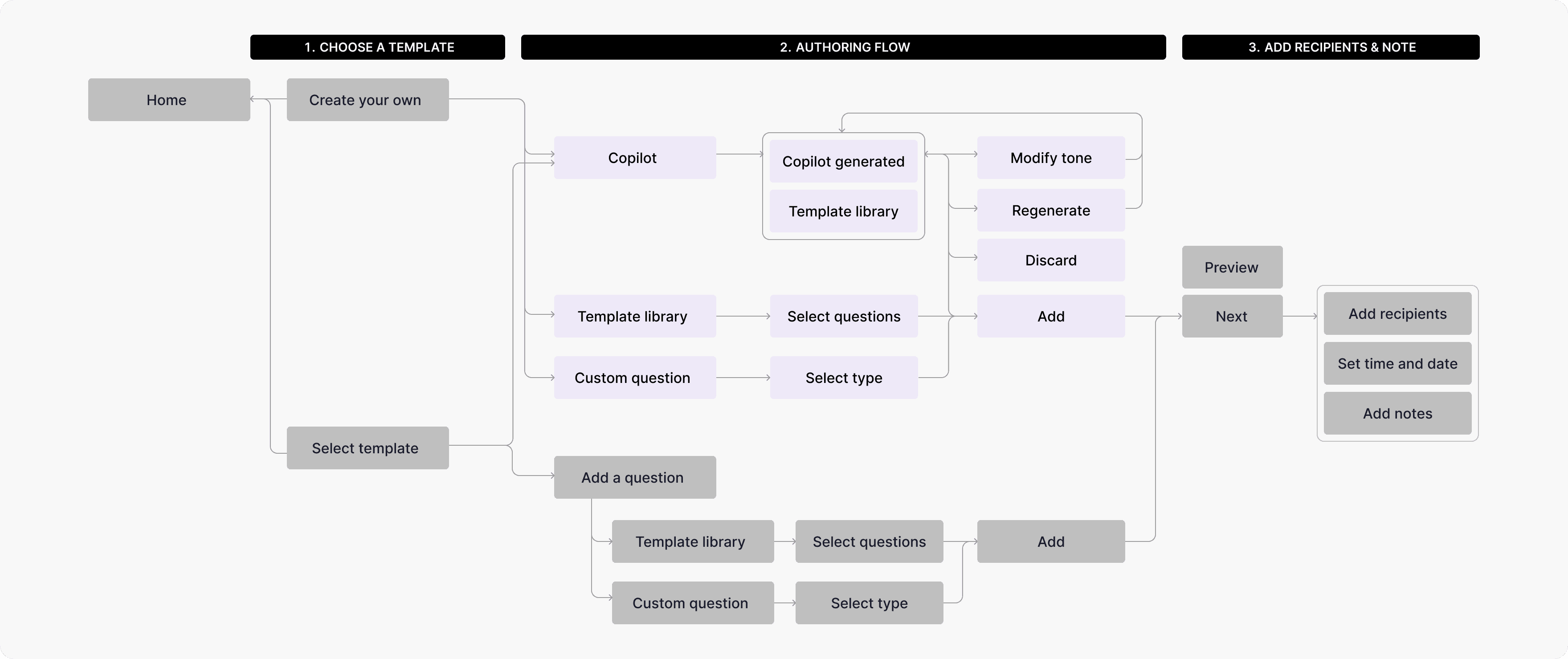
How we got there
I inherited this work midstream. Scope was already ballooned, alignment was fractured, and the eng team was blocked. I stepped in to clarify the problem and broke the work into three tracks:
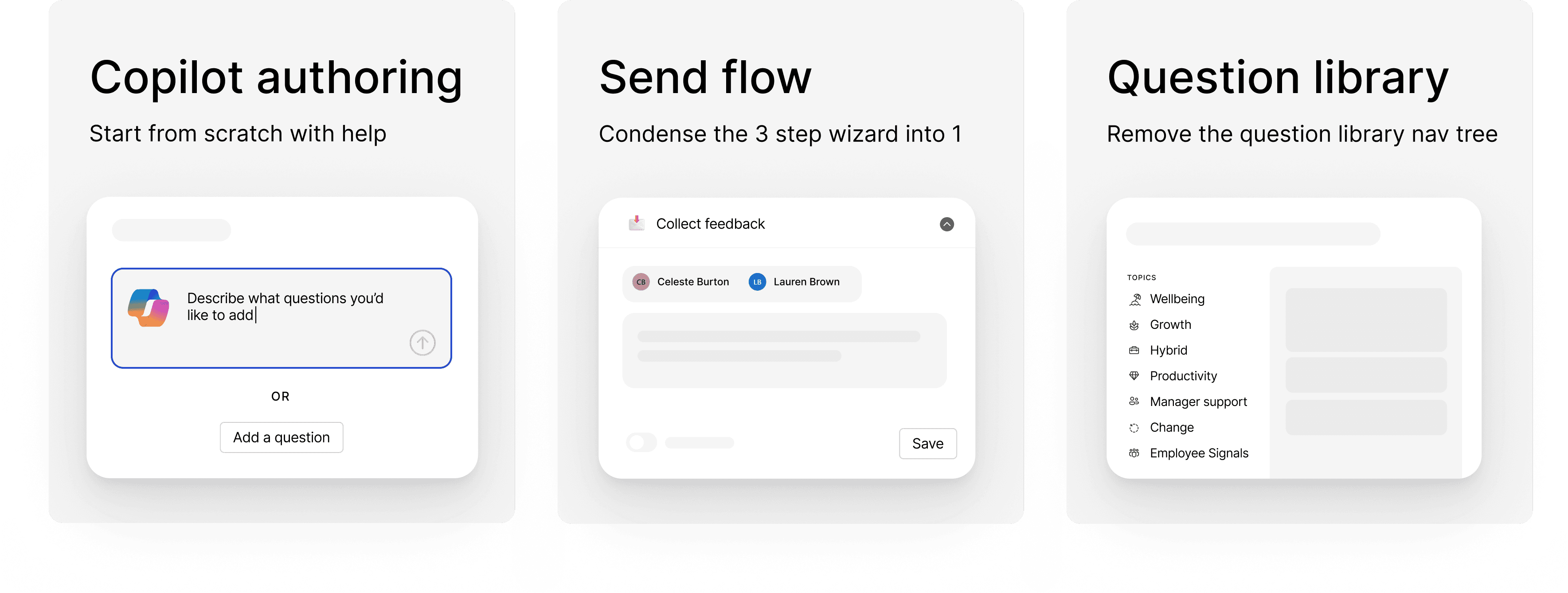
This gave the team structure and allowed us to sequence smartly. Copilot authoring emerged as the clearest scope: high demand, low dependency, and a fast path to value so we prioritized it first. Tackling it helped us deliver early wins, rebuild momentum, and create space to think more strategically about the rest.
Triaging work and scoping became a way to learn before we committed. For example, I ran focused research to pressure-test the value of the question library, and surfaced past insights that showed how redesigning the send flow without solving the underlying trust issue could actually backfire.
Reframing Copilot's role
I inherited a chat-style Copilot, but users weren't looking to co-create. They wanted:
Control first
Quiet, live support second
That insight redefined Copilot's role, not a chatbot, but a subtle accelerant. This shaped where it appeared, how much space it took, and how it supported authors.
In designing for confidence, I stripped unnecessary UI (e.g. illustrations, excessive vertical load), switched from passive to active tone, and grounded prompts to assist users. During a triad sync, I also surfaced a design that bundles title generation with context creation. It improved clarity and flow while reducing cognitive load.

Copilot start from scratch

mobile design
Library: kill it or keep it?
strategic reframe
There was internal pressure to remove the question library. Feedback was vague, metrics were weak, and some believed it hindered Copilot. I ran a unmoderated A/B test to get a clean read.
90% of managers preferred keeping the question library.
They used it to browse and clarify what they needed. Usability testing revealed subtle friction points, so I made targeted improvements: clarified question origins, sharper copy, and a cleaner Copilot entry point to better match how users explored and refined their surveys.
❌
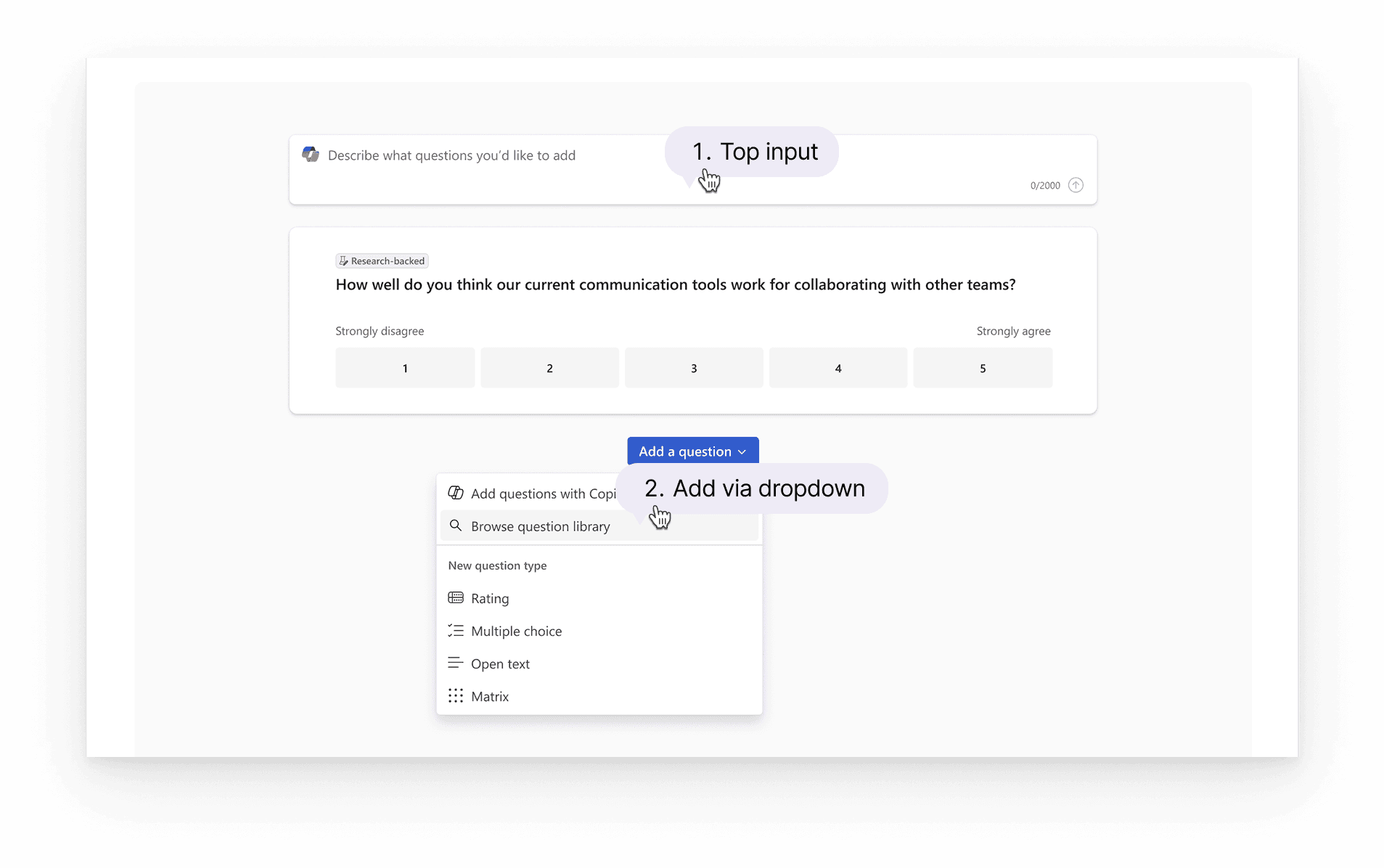
library dropdown
✅
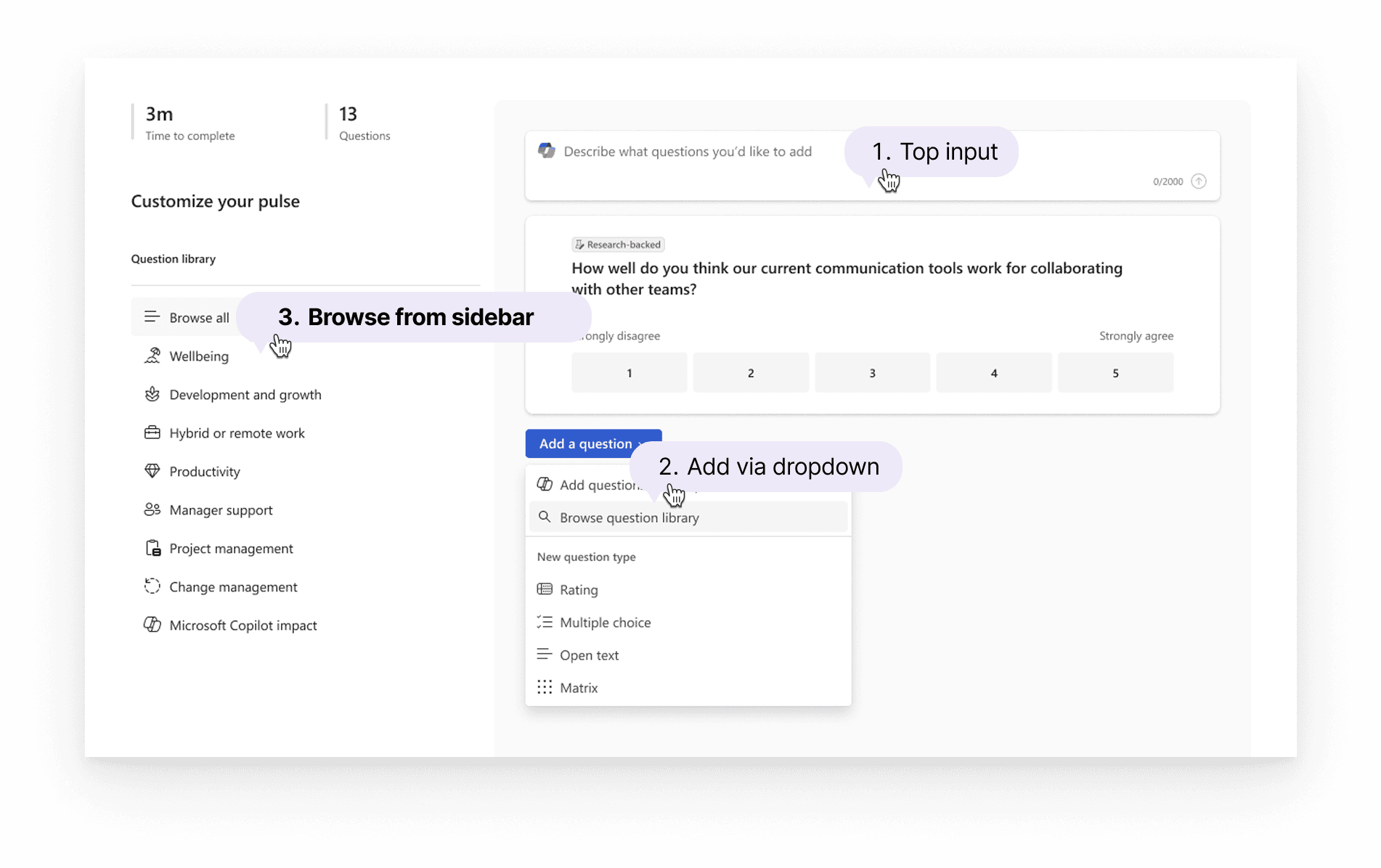
library in sidebar and dropdown
Send flow
strategic reframe
At first glance, simplifying the send flow seemed like the right move. The three-step wizard felt clunky, and there was pressure to streamline it. I agreed. But as I dug deeper, the data told a different story: authors weren’t even reaching the send step.
So I paused and reframed the problem.
This wasn’t about reducing clicks, it was about reducing doubt.
Authors weren’t confident their responses were truly anonymous, and that hesitation was breaking momentum. Simplifying the UI wouldn’t fix that. We needed to build trust. To validate this, I reanalyzed past research and surfaced a key insight: users lacked clarity and control at the final step.
I aligned PM and leadership on a different approach, introducing a clear anonymity toggle. It gave authors confidence in what was being shared, and what wasn’t.
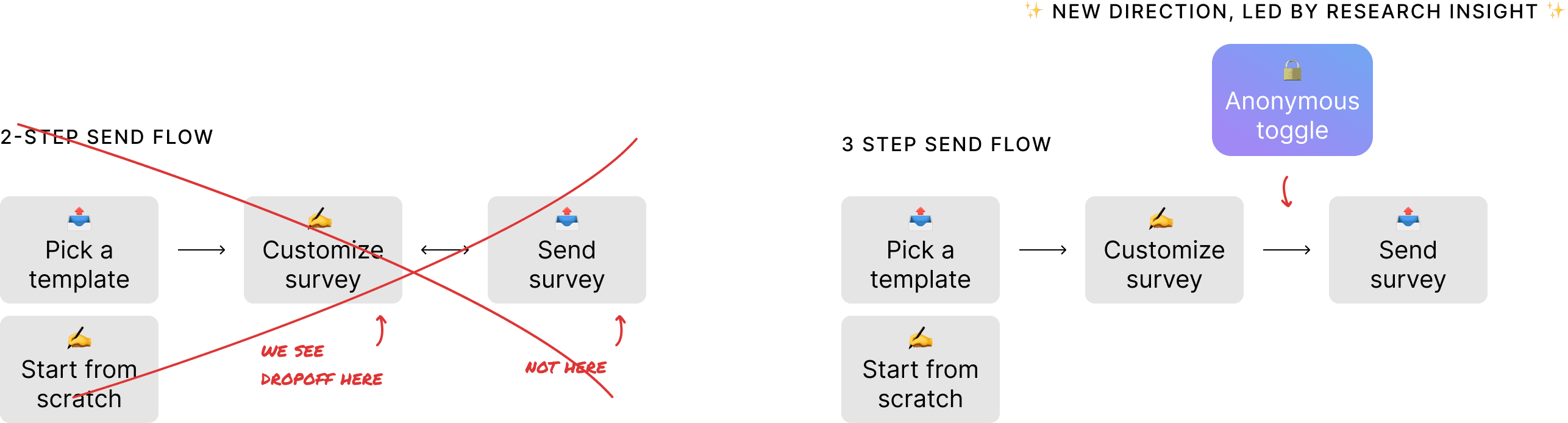
It was one of the most impactful calls, not because we shipped something, but because we stopped the wrong thing from shipping. It saved engineering time, avoided a surface-level fix, and paved the way for a trust-first foundation now being built by another team.
Outcome
metrics
84%
of completed surveys use create from scratch
2nd
most used path
Usage and sentiment validated the model, setting the foundation for other AI-powered authoring tools
Reflection
This wasn’t about building faster, it was about building right. I pushed for structure over speed, scoped strategically, and challenged assumptions. By grounding design in emotional insight, we built an experience that truly meets users where they are.
Copilot authoring is a model for what lightweight AI support should feel like across Microsoft Viva.